- Call: +1 (610) 329-7239
- Email: info@tecgurus.live


Instructor: David Richard
12 Weeks (90–100 contact hours, including labs & project work)
· Experienced Linux/Windows administrators
· IT professionals transitioning into DevOps or cloud infrastructure roles
· Learners preparing for certifications (RHCE, LPIC-2/3, CompTIA Linux+, or MCSA)
· Intermediate knowledge of system administration (Linux or Windows)
· Familiarity with networking concepts, shell scripting, and virtualization
This course focuses on enterprise-grade system management, covering automated provisioning, configuration management, performance tuning, security, monitoring, and disaster recovery.
It emphasizes cross-platform administration, using both Linux and Windows systems where applicable, and culminates in a hands-on capstone project that simulates a production-grade environment.
By the end of this course, learners will be able to:
1. Manage complex Linux and Windows server environments efficiently.
2. Automate administrative tasks using shell scripts and configuration tools.
3. Implement robust user management, permissions, and security policies.
4. Optimize system performance and resource utilization.
5. Configure advanced networking and storage solutions.
6. Implement high availability, backup, and disaster recovery strategies.
7. Integrate system administration with cloud and DevOps workflows.
8. Monitor, audit, and maintain reliable production systems.
0 Reviews

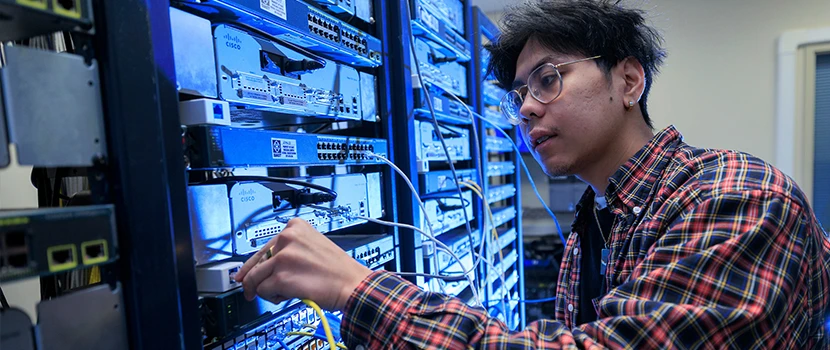
Master enterprise-grade networking, routing and switching, network automation, virtualization, and security.

Master database design, optimization, replication, backup & recovery, performance tuning, security, and cloud database management.

Master automation, cloud-native infrastructure, CI/CD pipelines, container orchestration, observability, and site reliability engineering (SRE).
